Książka PoD (Print-on-Demand) – drukowana na indywidualne zamówienie. Oferta z
wydłużonym czasem wysyłki.
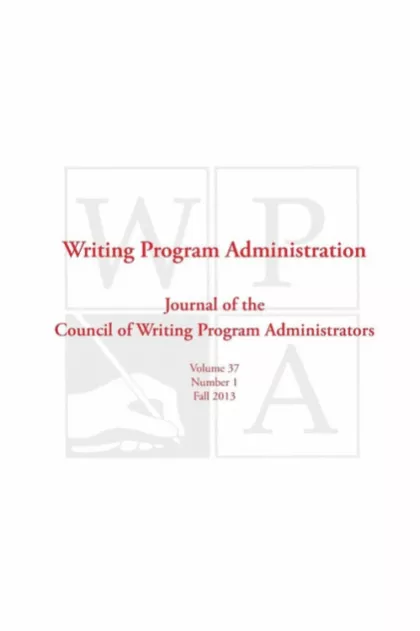
Wpa -
WPA: WRITING PROGRAM ADMINISTRATION publishes articles and essays concerning the organization, administration, practices, and aims of college and university writing programs. Possible topics include writing faculty education, training, and professional development; writing program creation and design the development of rhetoric and writing curricula; writing assessment within programmatic contexts advocacy and institutional critique and change; writing programs and their extra-institutional relationships with writing's publics; technology and the delivery of writing instruction within programmatic contexts; wpa and writing program histories and contexts; WAC / ECAC / WID and their intersections with writing programs; the theory and philosophy of writing program administration issues of professional advancement and wpa work; and projects that enhance wpa work with diverse stakeholders. CONTENTS OF WPA 37.1: From the Editors | 'WPAs, Writing Programs and the Common Reading Experience' by Brad Benz, Denise Comer, Erik Juergensmeyer, and Margaret Lowry | 'The Research Paper and Why We Should Still Care' by Doug Brent | 'When the Writing Requirements Went Away: An Institutional Case Study of Twenty Years of Decentralization/Abolition' by Duncan Carter, Christie Toth, and Hildy Miller | 'Taking the Long View: Investigating the History of a Writing Program's Teacher Evaluation System' by Laura J. Davies | 'WPA as Tempered Radical: Lessons from Occupy Wall Street' by Casie Fedukovich | 'Magic, Agency and Power: Mapping Embodied Leadership Roles' by Tina S.Kazan and Catherine Gabor | 'Creating Accessible Spaces for ESL Students Online' by Fernando Sánchez | 'A Queer Eye for the WPA' by Harry Denny | 'Queering the Writing Program: Why Now? How? And Other Contentious Questions' by Karen Kopelson | 'WPAs in Dialogue Response to Faye Halpern's 'The Preceptor Problem: The Effect of 'Undisciplined Writing' on Disciplined Instructors' by Andrea Scott | 'Response to Andrea Scott' by Faye Halpern | Review Essays: 'In the Internet Age, Who Needs Textbooks?' Richard Colby reviews Moxley, Joseph, ed. Writing Commons: The Home for Writers and Rhetoric and Composition WikiBook' | 'Multimodality in Local and Disciplinary Praxes' Randall W.Monty reviews Bowen, Tracey, and Carl Whithaus. Multimodal Literacies and Emerging Genres; Miller, Suzanne M., and Mary B. McVee Multimodal Composing in Classrooms: Learning and Teaching in the Digital World; and Rowsell, Jennifer. Working with Multimodality: Rethinking Literacy in a Digital Age | 'Contributors'