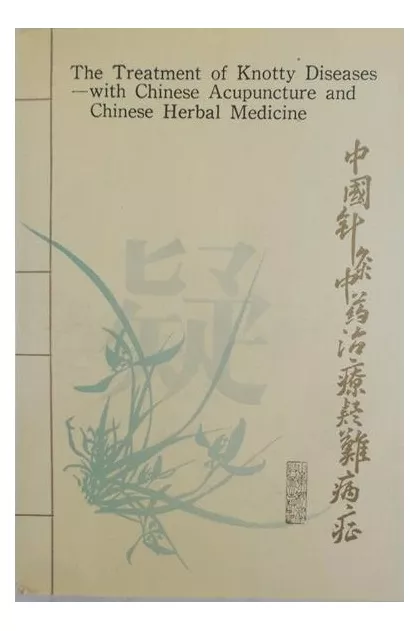
The treatment of knotty diseases with chinese acupuncture and chinese herbal medicine - Xiao Gong
The thyroid gland produces hormones that have two primary functions: they enhance protein synthesis and oxygen utilization. These physiologic activities, in turn, influence the basal metabolic rate (BMR). The level of thyroid hormone production is determined by levels of thyroid stimulating hormone (TSH) released from the pituitary gland, by availability of iodine a tyrosine (converted by the gland to the thyroid hormones), and by the condition of the thyroid tissues themselves. TSH levels are further regulated by the hypothalamus, and no doubt by other regulatory mechanisms, producing a feedback loop so that TSH increases as thyroid hormones decrease and TSH decreases when thyroid hormones increase. Measures of the amount of the thyroid hormones T3 (triiodothyronine) and T4 (thyroxine) in the blood plasma are considered a substantive evaluation of thyroid function. Additional diagnostic factors can reveal the presence and nature of thyroid disease. The thyroid gland also produces calcitonin, which acts in conjunction with parathyroid hormone to regulate calcium levels; thyroid disease may affect this function.
Thyroid disease affects about 2.5% of the American population, but because the disease predominantly strikes middle-aged women, the incidence within this group is rather high. Women are about four times more likely than men to suffer hyperthyroid disorders, eight times more likely to suffer hypothyroidism, and about twice as likely as men to suffer thyroid tumors. Approximately half the cases of thyroid disease involve hyperthyroidism and the other half involve hypothyroidism. Despite the differing outcomes, the main cause of the disease as it occurs today is an autoimmune process. Grave's disease is the most common hyperthyroid condition; in severe cases it is treated by removal of thyroid tissue either through surgery in young individuals and in pregnant women, or via irradiation from an iodine isotope-this rapidly binds to the thyroid, and thus causes maximum destruction of tissues at this site. Thyroid-inhibiting drugs, such as methimazole, may be used in less severe cases. Hashimoto's thyroiditis is the most common autoimmune disorder that causes hypothyroidism. In its normal course, it begins with an episode of hyperthyroidism which spontaneously converts to hypothyroidism. It is treated mainly by giving oral thyroid hormone (thyroxine) as a replacement therapy, the same therapy given after thyroidectomy or irradiation of the thyroid gland for hyperthyroid patients.
Hyperthyroidism follows a course similar to many inflammatory autoimmune disorders, that is, with periods of flare-up and remission. Hypothyroidism, however, appears to follow a more steady course, and might thus be comparable to early-onset diabetes; the thyroid gland becomes enlarged or shrunken and has little or no function, just as the insulin-producing cells of the pancreas of the diabetic patients have little or no function.
It is important to note, however, that a different form of thyroid disease was the dominant one in earlier times: iodine-deficiency goiter. This disorder often produces a very large mass in the neck area. It has become less common in the United States as a result of the practice of adding iodine to the national salt supply and by the recommendations to consume more seafood. It is also relatively easy to diagnose and treat.
The current medical therapies for thyroid disorders other than iodine-deficiency goiter are often deemed inadequate because of difficulties in regulating the level of thyroid hormones through use of drugs or an exogenous source of thyroid hormone. As a result, patients often experience only partial relief of the symptoms and those who suffer from hyperthyroidism often have to deal with hypothyroid conditions following medical destruction of the thyroid gland.
Therefore, it is of interest to investigate the methods used by Chinese doctors. Thyroid disease is common in China, and it is frequently treated by herbal medicine or a combination of herbs and drugs. Positive response is a common outcome: the aggregate "cure" rate for hyperthyroidism reported in more than a dozen studies involving more than 700 patients is 42%, with most other patients well-managed even after cessation of the therapy. By "cure," it is meant that the primary hyperthyroid symptoms are removed and that the laboratory measures (such as T3 and T4 levels and iodine uptake) are in the normal range. Clearly, it is not meant that there is any change in the underlying genetic propensity for autoimmunity, nor is it suggested that the immunologic memory of the T-cells is altered. Rather, the initiating factors for autoimmune attack appear to be diminished and, as shown in two studies, circulating antibodies against thyroid tissue are reduced. Follow-up studies of patients claimed to be cured during these treatment programs indicates persistence of the favorable outcome.