Książka PoD (Print-on-Demand) – drukowana na indywidualne zamówienie. Oferta z
wydłużonym czasem wysyłki.
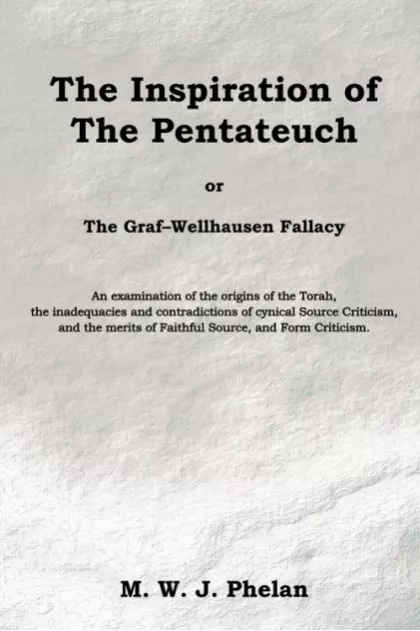
The Inspiration of the Pentateuch, Or, the Graf-Wellhausen Fallacy - M. W. J. Phelan
SUB-TITLE
An examination of the origins of the Torah, the inadequacies and contradictions of cynical Source Criticism, and the merits of Faithful Source, and Form Criticism.
BOOK DESCRIPTION
Bible-based Christianity claims to be a revelation from God, in fact it claims to comprise the most comprehensive collection of truths concerning the nature and purposes of God, and the nature and destiny of mankind that has ever been revealed. It claims that this revelation was made to mankind by Divinely Inspired, and therefore, utterly inerrant writings that have been transmitted to us through what is popularly known as The New Testament. However, this collection of documents rests upon the previously existing collection of documents which comprise the Hebrew Canon, referred to by Christians as the Old Testament, and therefore is itself acutely vulnerable to any assault made upon the Hebrew Canon, or Old Testament. The very foundation of the Hebrew Canon, in terms of the claimed sequence of writing, historical events narrated, and theological importance, is the Torah, or Pentateuch, or Five-Books-Of-Moses; namely, Genesis, Exodus, Leviticus, Numbers, and Deuteronomy.
It is not surprising then, that while there is continuing debate about the so-called Synoptic Problem, the authorship and placement of the Pastoral Epistles, the provenance of the Book of Daniel, the authorship of the Book of Isaiah, and many of the Psalms, it is the Pentateuch that has been the target of the most unremitting assaults of sceptics and Critics down the years, and the Book of Genesis has suffered the most brutal of these attacks. It is these assaults upon the Pentateuch that form the subject of this book.
TABLE OF CONTENTS
Introduction
Part One: The origin and nature of the Graf-Wellhausen Hypothesis
Chapter One: Pre-Grafian Higher Criticism
Chapter Two: Post-Grafian Higher Criticism
Part Two: Basic Objections To The Graf-Wellhausen Hypothesis
Chapter Three: The Antiquity Of The Age Of Writing
Chapter Four: The Antiquity Of The Pentateuch
Chapter Five: The Unity Of The Pentateuch Seen From Its Literary Construction
Part Three: The Literary Sources Of The Pentateuch
Chapter Six: The Book Of Deuteronomy
Chapter Seven: The Heart Of The Torah
Chapter Eight: The Book Of Genesis
Part Four: Positive Form Criticism And The Pentateuch
Chapter Nine: Positive Form Criticism And The Book Of Genesis
Chapter Ten: Positive Form Criticism And The Testimony To Christ
Part Five: Propositions And Conclusion
Chapter Eleven: Main Conclusion And Propositions
Part Six: Supplementary Studies: The non literary problems of the Pentateuch
Supplement One: The Problem Of The Levites
Supplement Two: The Credibility Of Genesis
Part Seven: Appendices, Glossary, And Bibliography
Appendix I: The Order And Divisions Of The Books Of The Hebrew Canon
Appendix II: The Ugaritic Alphabet
Appendix III: Table Of Hebrew Alphabets
Appendix IV: IV Ezra 14:1-50
Appendix V: The Covenant Book
Appendix VI: The Usage Of choq And chuqqah
Appendix VII: The Usage Of mishpat, shephetim, And shephet
Appendix VIII: The Usage Of mitzvah
Appendix IX: The Overlapping Of The Lifespans Of The Patriarchs
Appendix X: The Descent Of Samuel
Appendix XI: The Age Of Terah At The Birth Of Abraham
Appendix XII: Further Evidence For The Views Of Kikawada and Quinn
Glossary
Bibliography